
Basements are among the most underused spaces in Dublin homes. With the right waterproofing system, natural light strategy and interior design, a basement can become the most dramatic and valuable room in your home. Here's everything you need to know before you start.
Assessing Your Basement's Potential
Not all basements are equal. Before committing to a conversion project, your builder and a structural engineer will assess:
- Ceiling height — a minimum of 2.1m is required for a habitable room, but 2.4m+ is ideal. Some projects involve underpinning the existing foundations to lower the basement floor and gain extra headroom
- Current damp condition — most unfinished basements in Dublin have some level of water ingress. This is normal and does not prevent conversion, but the waterproofing system must be designed to handle the ground water pressure present
- Natural light potential — does the basement have any existing windows or external walls facing the garden? Are there opportunities for light wells or pavement lights?
- Access and egress — Building Regulations require an adequate means of escape from a habitable basement room, typically an openable window above ground level or a direct external door

Waterproofing Systems — The Most Important Decision
The waterproofing system is the most critical element of any basement conversion. Get this wrong and your new basement room will be damp, unusable and expensive to fix. There are three main approaches, often used in combination:
Type A — Barrier Protection
Tanking membranes applied to the external (Type A External) or internal (Type A Internal) faces of the structure. Applied as bituminous coatings, cementitious slurries or sheet membranes. Suitable for lower water tables.
Type B — Structural Waterproofing
The concrete structure itself is made waterproof by using water-resistant concrete mix and careful detailing of joints, penetrations and construction joints. Usually combined with Type A or C protection.
Type C — Drained Protection
A cavity drain membrane system (studded HDPE membrane) is fixed to the internal walls and floor. Any water that penetrates is channelled to a sump pump and pumped away. The most reliable system for high water tables.
BS 8102:2022 recommends that all basement conversions use at least two complementary waterproofing types (e.g. Type A + Type C). A single Type A tanking system is only appropriate for very low water tables with minimal hydrostatic pressure.
Natural Light Solutions
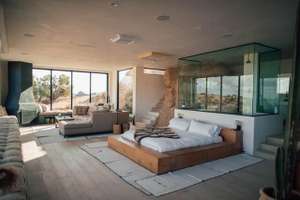
The biggest concern most homeowners have about basement conversions is the lack of natural light. There are several highly effective solutions:
Light Wells
An excavated area alongside the building that allows windows to be installed at basement level. The well is lined with either retaining walls, galvanised steel liners or stone, and must be properly drained. A light well combined with a full-height window can flood a basement room with natural light.
Pavement Lights
Structural glass blocks or gratings set into the floor of a courtyard or pathway above the basement, allowing daylight to filter down from above. A classic solution in Georgian Dublin townhouses.
Sun Pipes / Tubular Skylights
Reflective tubes that channel daylight from a rooftop dome down through the building to the basement. Suitable where excavation for a light well is not feasible.
Planning Permission Requirements
Planning rules for basement conversions in Dublin City and County:
- Converting an existing basement (no external works) is generally exempt from planning permission
- Creating a new basement (excavation under an existing building) usually requires planning permission
- Installing a light well visible from the street requires planning permission
- Creating a separate self-contained dwelling unit in a basement always requires planning permission
- Works in Architectural Conservation Areas (ACAs) have stricter rules and usually require permission
Costs of a Dublin Basement Conversion
| Scope | Approx. Cost (Dublin, 2026) |
|---|---|
| Waterproofing only (existing space) | €8,000 – €18,000 |
| Basic conversion (waterproofing + electrics + plastering) | €25,000 – €40,000 |
| Full conversion with bathroom + light well | €50,000 – €80,000 |
| Self-contained apartment (with planning) | €80,000 – €130,000 |
| New basement creation (excavation required) | €120,000 – €250,000+ |
Building Regulations for Habitable Basements
Converting a basement to a habitable room requires compliance with all relevant parts of the Building Regulations:
- Part A (Structure) — existing walls and foundations must be assessed; underpinning may be required
- Part B (Fire Safety) — habitable basements require a protected means of escape (typically a window at least 0.33m² opening area, or a compliant stair with fire doors)
- Part C (Damp) — waterproofing must meet BS 8102 requirements
- Part F (Ventilation) — adequate mechanical or natural ventilation must be provided
- Part L (Energy) — walls, floor and ceiling must meet minimum insulation requirements
Timeline — What to Expect
Week 1–2
Structural survey, waterproofing design by specialist engineer, building regulations application if required.
Week 3–6
Strip-out, waterproofing system installation, drainage and sump pump installation.
Week 7–10
Insulation, floor screed, first-fix electrics and plumbing, plastering.
Week 11–14
Second-fix electrics, tiling, flooring, bathroom fit-out, decoration and snagging.
✅ Advantages of a Basement Conversion
- No loss of garden space
- Excellent thermal mass — stays cool in summer, warm in winter
- Potential rental income if configured as an apartment
- Adds significant value to the property
- Low noise level — ideal for home cinema, music room or gym
⚠️ Challenges to Consider
- Waterproofing system is a significant cost
- Natural light requires creative solutions
- Sump pump requires ongoing maintenance
- Ground water conditions affect costs significantly
- Access can make construction more challenging