
A loft conversion is consistently the most cost-effective way to add a bedroom to your Dublin home — without losing any garden space. This comprehensive guide covers every type of conversion, what they cost, planning rules, and everything your builder needs to know before starting work.
Is My Loft Suitable for Conversion?
Before committing to a loft conversion, your builder will need to assess a few key structural and dimensional factors:
Head Height
Measure from the top of the ceiling joist to the underside of the ridge board. You need at least 2.2m for a habitable room — ideally 2.4m+.
Roof Pitch
Steeper roofs (35–45°) are more suitable for conversion. Shallower roofs may need a dormer to create enough headroom.
Roof Structure
Traditional cut roofs (pre-1970s) are easier and cheaper to convert. Modern trussed roofs require more structural work and cost.
Water Tank
If your cold water tank is in the loft, it will need to be relocated — usually to an airing cupboard or converted to a combi boiler system.
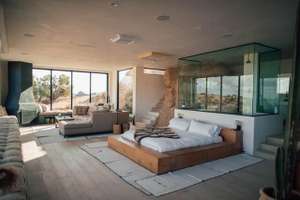
Types of Loft Conversion Explained
1. Velux (Roof Light) Conversion
The simplest and most affordable type. Roof windows are cut into the existing roof slope — no structural changes to the roof profile. The usable floor area is limited by the existing headroom, but for roofs with adequate height this is a very cost-effective solution.
- Cost: €18,000 – €30,000
- Duration: 4–6 weeks
- Planning permission: Not usually required
2. Dormer Conversion
A box-shaped extension that projects vertically from the roof slope, creating a room with full-height vertical walls and a flat or pitched roof. Massively increases usable floor area compared to a Velux conversion. The most common type of loft conversion in Dublin.
- Cost: €35,000 – €55,000
- Duration: 6–10 weeks
- Planning permission: Rear dormers often exempt; side dormers usually need permission
3. Hip-to-Gable Conversion
Suitable for semi-detached and detached properties with a hipped roof (where the roof slopes on all four sides). The sloping hip end is removed and replaced with a vertical gable wall, dramatically increasing the floor area.
- Cost: €50,000 – €75,000
- Duration: 8–12 weeks
- Planning permission: Usually required
4. Mansard Conversion
The most extensive — and most expensive — type of loft conversion. The entire roof structure is replaced with near-vertical walls (typically at a 72° angle) and a flat roof. Creates maximum headroom and floor space, often adding a complete second floor to a bungalow or dormer bungalow.
- Cost: €70,000 – €110,000+
- Duration: 12–18 weeks
- Planning permission: Almost always required
| Type | Space Added | Cost Range | Planning |
|---|---|---|---|
| Velux | Low (existing headroom only) | €18k–€30k | Usually not needed |
| Dormer | Medium–High | €35k–€55k | Rear often exempt |
| Hip-to-gable | High | €50k–€75k | Usually needed |
| Mansard | Maximum | €70k–€110k+ | Always needed |
Planning Permission in Dublin
Planning rules for loft conversions in Ireland are set by the Planning and Development Regulations 2001 (as amended). Key points:
- Roof alterations to the front of a house always require planning permission
- Rear dormer windows are generally exempt if the total roof alteration area is less than 40m²
- Properties in Architectural Conservation Areas (ACAs) have stricter rules
- Planning permission applications typically take 8 weeks to decide
- Retrospective planning permission is possible if an unauthorised conversion was carried out correctly — but it's better to seek permission first
Building Regulations Requirements
All loft conversions must comply with the Building Regulations regardless of whether planning permission is required. Key parts that apply:
- Part A (Structure) — the floor structure must be strengthened to carry habitable room loads (typically 1.5kN/m²)
- Part B (Fire Safety) — a protected means of escape must be provided, typically a 30-minute fire-rated door at the bottom of the new staircase
- Part C (Dampness) — the roof covering and any new elements must prevent moisture ingress
- Part L (Conservation of Energy) — insulation must meet minimum U-value requirements (0.16 W/m²K for roof)
- Part K (Staircases) — the new staircase must meet minimum headroom (2.0m) and rise/going requirements
The Construction Process — Step by Step
Survey & Design
Structural engineer surveys the existing roof and designs the new floor structure, steelwork and any new roof elements.
Scaffold Erection
External scaffold is erected to allow safe working on the roof with minimal disruption to the interior.
Structural Work
New floor joists are installed, steelwork erected and existing roof structure modified as required.
Weatherproofing
New roof covering, dormer cladding and windows installed to make the structure watertight before interior work begins.
Insulation & Services
Insulation, electrics, heating (usually underfloor or radiators) and plumbing for en-suite installed.
Fit-Out
Plasterboard, skimming, flooring, bathroom fit-out, staircase installation, painting and final decoration.
Value Added by a Loft Conversion
According to data from Daft.ie and Sherry FitzGerald, adding a bedroom via a loft conversion typically adds 15–25% to the market value of a Dublin property. For a house worth €450,000, that's an increase of €67,500–€112,500 — far exceeding the cost of even a mansard conversion.
Adding an en-suite bathroom to the converted bedroom further increases the return. A master bedroom with en-suite is now the most-searched specification on Daft.ie among Dublin home buyers.
Frequently Asked Questions
Will I need to move out during the conversion?
No — in almost all cases you can remain in the house. The structural and weatherproofing work is carried out from external scaffold, minimising internal disruption. The staircase opening is typically the most disruptive day of the entire project.
How much will my energy bills change?
A well-insulated loft conversion actually reduces your energy bills by significantly reducing heat loss through the roof. We use 140mm–200mm of PIR insulation as standard, achieving a U-value well below the Building Regulations minimum.
Can I convert a trussed rafter roof?
Yes, but it costs more. Modern trussed rafter roofs (post-1970) need all the truss members to be removed and replaced with a structural steel frame. This adds €8,000–€15,000 to the cost compared to a traditional cut roof.